
Baton Rouge, LA · Garage Door Service
Garage Doors Here Predate the Insulation Rules You'd Expect
Most Baton Rouge garage doors date to the 1980s-90s stock, before insulation rules existed. Here's what that means for heat, cost, and repair in this climate.
- Repairs & new doors
- Springs & openers
- Serving 6 nearby communities
How Local Conditions Play In
Baton Rouge housing runs from 1962 through 2013, but the median build year lands at 1989, and the bulk of the stock across the twenty areas we work in - from Mid City South a mile out to Zachary sixteen miles north - went up in the 1980s and 90s. That matters because insulation requirements for garage doors weren't standard when most of these houses were framed. A door installed in 1987 or 1991 is very likely a single layer of steel or wood, no foam core, no thermal break at the frame. The climate here runs moderate on the heat side, not the brutal extremes you'd get further west or north, so a lot of owners never noticed the gap. The door did its job: it kept the garage dry and the car off the street. It just never kept the heat out, because nobody asked it to at the time it was built.
The Situation
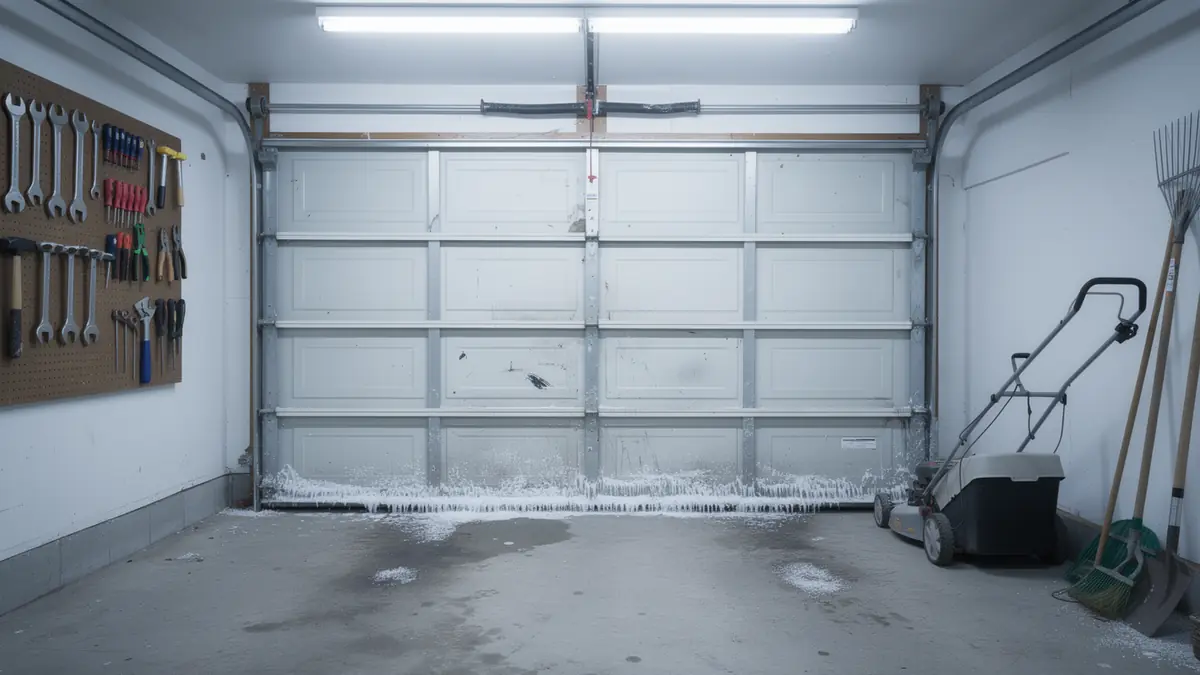
Walk into a garage built in that 1980s-90s window and you'll usually find a flat or lightly ribbed steel panel, single skin, maybe a quarter inch of nothing behind it. No polystyrene, no polyurethane fill, no vinyl backing. In a moderate heat climate that's tolerable most of the year, but on the hot stretch of summer afternoons that garage becomes a heat sink - the slab, the door, the trapped air all working against whatever's on the other side of the wall, especially if the garage backs onto a bedroom or a laundry room. The hardware ages the same way the panel does: springs and rollers sized for a lighter, uninsulated door, not for a heavier retrofit panel someone might bolt on later without checking the torsion spec. That mismatch is common enough in houses from this era that it's worth checking before any upgrade, not after.
Leaving It Alone
Nothing dramatic happens overnight. The door keeps opening and closing. But the steel on an uninsulated panel flexes more with heat than an insulated one does, and over three or four decades that flex works on the seams, the hinges, and the track alignment. You'll see it as a door that starts to bind on one side, or panels that rattle more than they used to. None of that is an emergency, and we won't tell you it is. What it does mean is a slow drift in comfort and in the cooling load on whatever room shares a wall with the garage - not something you'll see on one power bill, but something that adds up over a decade in a moderate-heat climate where the AC runs most months. If the door's structure is still sound, this is a maintenance issue, not a replacement one.
When to Call Someone
Call if the panel is visibly bowed, if the door's noticeably heavier or lighter to lift by hand than it used to be, or if you're planning to finish the room next to the garage and want to know what the door is actually doing to that wall. We'll tell you straight if insulating the existing panel makes sense or if the door's old enough that a retrofit kit isn't worth the labor against a new insulated door - that call depends on the door's condition, not just its age. One limitation up front: we don't make doors insulated after the fact by injecting foam into a panel that wasn't built to hold it; some 1980s and 90s steel doors just aren't candidates for that, and we'll say so rather than sell a fix that won't last.
Frequently asked questions
Is my garage door too old to insulate?
Depends on the panel, not just the year. Some flat steel doors from the 1980s-90s stock here can take a retrofit kit; others, especially ones with worn seams or bowed sections, can't hold foam properly and are better replaced outright. We check the panel in person before giving you an answer either way.
Does an uninsulated door really matter in a moderate climate?
It matters less here than in a harsher climate, but it still shows up as extra load on the AC in a room that shares a wall with the garage, and as more flex-related wear on the panel itself over the decades. It's a comfort and longevity issue more than an emergency.
Why wasn't my door insulated when the house was built?
Most houses in this area were framed in the 1980s and 90s, median around 1989, before garage door insulation was a standard requirement. The door you have is typical for that build era, not a sign anything was done wrong or cheap.
Related garage door services in Baton Rouge
More garage door guides
Book garage door service in Baton Rouge
Call now or request a quote - tell us what the door is doing and where you are.