Baton Rouge, LA · Garage Door Service
Why Baton Rouge Garage Door Springs Fail When It Finally Gets Cold
Baton Rouge rarely sees hard cold, but when a front drops the temperature overnight, aging torsion springs on 1980s and 90s doors are the ones that let go first.
- Repairs & new doors
- Springs & openers
- Serving 6 nearby communities
How Local Conditions Play In
Baton Rouge sits in a moderate-heat climate band, not one of the deep-freeze regions where contractors build spring life around winter stress. That matters here in a backward way. Because cold snaps are rare, the steel in a torsion spring spends almost all year expanding and relaxing in heat, not contracting in cold, so nobody's spring has been through the kind of repeated freeze-thaw cycling that toughens the metal up north. When a cold front does roll through and the temperature drops hard overnight, a spring that's already near the end of its rated cycle count is more likely to snap than it would be on a mild morning.
Most of the housing stock across this service area went up between 1962 and 2013, with the typical build year sitting around 1989, and a lot of subdivisions from that era - the kind of streets you'd find around Shenandoah, Inniswold, or Old Jefferson - still have original or first-replacement torsion hardware. A spring installed when a house was built in 1989 has had three decades of Louisiana summers to work through its cycle life already. A cold morning is just the trigger, not the cause.
The Situation
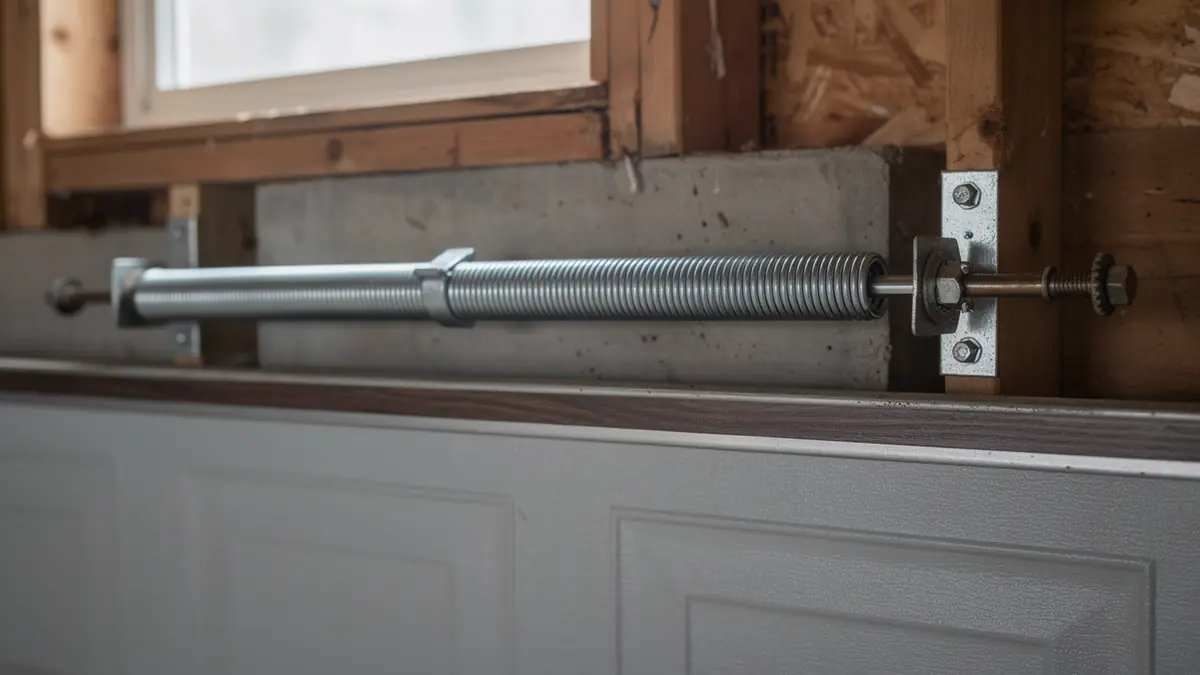
Here's what actually happens. Steel contracts slightly as it cools, which stiffens a spring that's already fatigued from years of daily cycling in the heat. If that spring is near its wind-count limit, the extra stiffness on a cold morning is enough to snap a coil that would have made it through one more mild day. You'll usually hear it - a loud bang from the garage - and then the door either won't lift at all or the opener strains and stalls partway up.
This isn't a Baton Rouge-specific mechanism in the sense that cold makes springs brittle the way it does in northern states. It's that a moderate-heat climate means homeowners here never expect a cold snap to matter, so a spring that's been quietly wearing out for twenty-some years gets ignored until a 38-degree morning finds its weak point. With 72,518 households and 50,523 owner-occupied houses across the area, a meaningful share of those garages are running springs original to a house built in the late 80s or 90s.
Leaving It Alone
A broken spring doesn't mean a broken door, but it does mean the door has no counterbalance. The opener was never built to lift the full weight of a panel door on its own, and running it that way for even a few cycles can burn out the motor or strip the drive gear. If anyone tries to lift the door manually without the spring doing its share of the work, that's also how fingers and backs get hurt - the door is heavier than it looks once the spring tension is gone.
Waiting a few days because the garage isn't urgent is understandable, especially with a median household income of $85,189 in the area meaning most owners are weighing this against other repairs. But every cycle on a dead spring is a cycle closer to opener damage, and that's a second repair bill stacked on the first one. If the other spring on a double-spring door is the same age, it's usually close behind - we don't replace just the broken one and leave its twin to fail next month.
When to Call Someone
If the door won't budge, or the opener strains and reverses, stop trying to force it and call. That's a spring job, not a DIY afternoon - torsion springs are under real tension and the tools to wind them safely aren't something most garages have lying around.
If the door still opens but feels heavier than normal, or you hear a grinding or popping sound on cold mornings, that's worth a call before it breaks outright, especially in a house from the 1980s or 90s where the spring has likely never been replaced. One limitation worth saying plainly: if a cold snap also bent a track or cracked a panel, fixing the spring won't fix that, and in older stock those problems sometimes show up together after the door's been forced on a dead spring. That's a second conversation, not an add-on we skip past.
Frequently asked questions
Why would cold weather matter in Baton Rouge if winters are mild here?
It's less about the cold itself and more about timing. Baton Rouge springs spend most of the year cycling through heat, not cold, so they're not tempered for a sudden temperature drop. A spring already near the end of its life from years of summer cycling is more likely to snap on the one cold morning we do get.
My house was built in the late 1980s - is the spring probably original?
It's possible. A lot of the housing stock in this area dates from 1962 to 2013, with 1989 as a rough median build year, and original torsion springs from that period are well past typical cycle life. If it's never been replaced, a cold snap is a plausible time for it to finally give out.
Can I just replace the one spring that broke?
You can, but if the other spring on a double-spring door is the same age, it's usually close to the same point in its cycle life. Replacing just one often means a second call within a short stretch when the matching spring goes too.
Related garage door services in Baton Rouge
More garage door guides
Book garage door service in Baton Rouge
Call now or request a quote - tell us what the door is doing and where you are.